Metal stamping has emerged as one of the most versatile and efficient manufacturing processes for creating complex part designs across diverse industries. This sophisticated technique combines precision engineering with cost-effective production methods, making it an indispensable solution for manufacturers seeking to produce intricate components with exceptional accuracy and consistency. The ability to transform flat metal sheets into three-dimensional parts with complex geometries has revolutionized modern manufacturing, enabling companies to meet increasingly demanding specifications while maintaining competitive pricing and delivery schedules.
The manufacturing landscape has witnessed significant evolution in recent decades, with complexity requirements driving innovation in production techniques. Traditional machining methods, while effective for certain applications, often fall short when dealing with intricate part geometries, high-volume production requirements, or tight tolerances. Metal stamping addresses these challenges by offering a comprehensive solution that combines speed, precision, and scalability in a single manufacturing process.
Progressive die technology represents the pinnacle of metal stamping innovation, enabling manufacturers to create complex parts through a series of sequential operations performed in a single press stroke. This advanced approach allows for multiple forming, cutting, and shaping operations to occur simultaneously, dramatically reducing production time while maintaining exceptional precision. The progressive die system moves the metal strip through various stations, with each station performing a specific operation that contributes to the final part geometry.
The sophistication of modern progressive dies enables manufacturers to incorporate features such as embossing, coining, piercing, and forming in a single continuous operation. This integration eliminates the need for secondary operations, reducing handling costs and minimizing the risk of dimensional variations that can occur when parts are transferred between different manufacturing processes. The result is a streamlined production flow that delivers consistent quality while optimizing manufacturing efficiency.
The science behind metal stamping involves precise control of material flow and deformation characteristics to achieve desired part geometries without compromising structural integrity. Advanced forming techniques utilize sophisticated tooling designs that guide material movement, ensuring uniform stress distribution and preventing common defects such as cracking, wrinkling, or tearing during the forming process.
Modern stamping operations leverage computer-aided engineering tools to simulate material behavior before physical tooling is created. These simulations enable engineers to optimize die designs, predict potential forming challenges, and develop solutions that ensure successful part production. The ability to model complex material interactions allows manufacturers to push the boundaries of what is achievable through conventional forming methods, creating parts with geometries that were previously considered impossible to produce economically.
Metal stamping excels in creating parts with complex three-dimensional geometries that incorporate multiple planes, angles, and curved surfaces within a single component. This capability is particularly valuable in industries such as aerospace, automotive, and electronics, where space constraints and functional requirements demand innovative part designs that maximize performance while minimizing weight and material usage.
The process accommodates various forming operations including deep drawing, stretching, bending, and flanging, often combining multiple techniques within a single die system. This versatility allows designers to create parts with intricate features such as compound curves, multiple bend radii, and integrated mounting points or connection interfaces. The ability to produce such complex geometries in a single operation eliminates assembly requirements and reduces the potential for tolerance stack-up issues.
Advanced metal stamping techniques enable the integration of functional features directly into the part design, eliminating the need for secondary machining operations or additional components. Features such as threads, mounting holes, strengthening ribs, and snap-fit connections can be incorporated during the stamping process, creating parts that are ready for assembly immediately upon completion of the forming operation.
This integration capability extends to surface texturing and decorative elements, allowing manufacturers to create parts that meet both functional and aesthetic requirements. Embossing, coining, and texture rolling operations can be incorporated into the stamping sequence, producing parts with enhanced grip surfaces, identification markings, or decorative patterns that eliminate the need for post-processing treatments.
The precision capabilities of modern metal stamping operations enable manufacturers to achieve tight tolerances consistently across high-volume production runs. Advanced tooling designs, combined with precise press control systems, ensure that dimensional variations are minimized and parts meet stringent quality requirements. This level of precision is essential for complex assemblies where component interfaces must mate perfectly to ensure proper function and performance.
Statistical process control methods are integrated into metal stamping operations to monitor and maintain quality standards throughout production runs. Real-time measurement systems track critical dimensions and identify potential drift before it results in out-of-specification parts. This proactive approach to quality management ensures consistent part quality while minimizing waste and reducing the need for costly rework or rejection of completed parts.
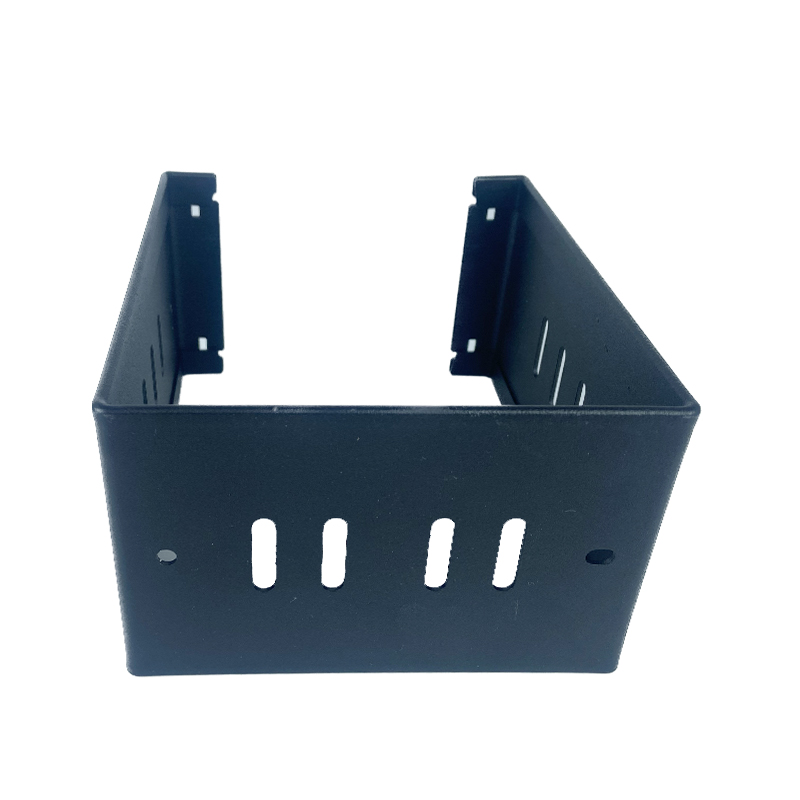
Metal stamping processes can be optimized to produce parts with superior surface finishes that meet demanding aesthetic and functional requirements. Proper die design, material selection, and process parameter control contribute to achieving smooth, uniform surfaces that may eliminate the need for additional finishing operations. This capability is particularly valuable for visible components or parts that require specific surface characteristics for optimal performance.
Advanced lubrication systems and coating technologies further enhance surface quality while protecting tooling from wear and extending die life. These systems ensure consistent part quality throughout extended production runs while minimizing maintenance requirements and tooling replacement costs. The result is a manufacturing process that delivers high-quality parts with predictable surface characteristics and dimensional accuracy.
Metal stamping offers significant economic advantages for high-volume production of complex parts, with unit costs decreasing substantially as production quantities increase. The initial investment in tooling is amortized across large production runs, resulting in very competitive per-part costs that are difficult to match with alternative manufacturing methods. This cost structure makes metal stamping particularly attractive for applications requiring thousands or millions of identical parts.
The speed of metal stamping operations contributes significantly to overall cost effectiveness, with modern presses capable of producing hundreds of parts per minute depending on part complexity and size. This rapid production capability, combined with minimal material waste through optimized nesting and strip layouts, creates a manufacturing solution that maximizes material utilization while minimizing production time and associated labor costs.
The ability to create complex parts with integrated features through metal stamping reduces or eliminates many secondary operations that would otherwise be required. This consolidation of manufacturing steps results in significant cost savings through reduced handling, reduced work-in-process inventory, and elimination of additional tooling and setup requirements. Parts that might otherwise require multiple components and assembly operations can often be created as single stamped components.
Labor costs are further reduced through the automation capabilities inherent in modern metal stamping operations. Automated feeding systems, part handling equipment, and quality inspection systems minimize the need for manual intervention while ensuring consistent production quality. This automation capability allows manufacturers to maintain competitive cost structures while meeting demanding quality and delivery requirements.
Modern metal stamping processes accommodate a wide range of materials, from traditional steel and aluminum alloys to advanced high-strength steels, titanium alloys, and specialized materials with unique properties. This material versatility enables manufacturers to select optimal materials for specific applications while leveraging the cost and efficiency advantages of stamping technology. The ability to work with advanced materials expands the potential applications for stamped parts into demanding environments and critical applications.
Material properties such as strength, formability, and surface characteristics can be optimized through careful selection and processing techniques. Pre-coating operations, heat treatment, and specialized forming techniques can be integrated into the stamping process to achieve desired material properties while maintaining manufacturing efficiency. This flexibility allows engineers to design parts that meet specific performance requirements without compromising manufacturability or cost effectiveness.
Metal stamping technology serves diverse industries with unique requirements and challenges, from automotive body panels and structural components to aerospace brackets and electronic device housings. Each industry benefits from the ability to create complex parts that meet specific performance, weight, and cost requirements while maintaining the quality and consistency demanded by modern manufacturing standards.
Automotive applications leverage metal stamping for both visible and structural components, taking advantage of the process's ability to create parts with complex curves, multiple forming operations, and integrated features. Electronics manufacturers utilize stamping for creating precise connector housings, heat sinks, and shielding components that require tight tolerances and excellent surface finishes. Aerospace applications benefit from the weight reduction and strength characteristics achievable through advanced forming techniques and material optimization.
Metal stamping can produce parts with deep draws, compound curves, multiple bend angles, flanges, embossed features, and integrated mounting points. The process accommodates three-dimensional shapes with varying wall thicknesses, complex contours, and functional features such as threads, holes, and snap-fit connections. Advanced progressive die systems enable the creation of parts that combine multiple forming operations, resulting in complex geometries that would require multiple manufacturing steps using other methods.
Metal stamping offers significant advantages over machining for high-volume production of complex parts, including faster production rates, lower per-part costs, minimal material waste, and the ability to create thin-walled sections that would be difficult to machine. While machining excels for prototypes and low-volume production, stamping provides superior economics and consistency for large production runs. Stamping also enables the creation of integral features and complex geometries in a single operation, reducing assembly requirements and improving overall part performance.
Key factors include material properties, part geometry, tolerance requirements, production volume, and tooling complexity. Material formability, thickness, and strength characteristics must be compatible with the required forming operations. Part geometry must allow for proper material flow and die access, while maintaining structural integrity throughout the forming process. Production volumes must justify tooling investments, and tolerances must be achievable within the capabilities of the stamping process and equipment.
Modern operations utilize advanced process control systems, real-time monitoring, statistical process control, and automated inspection systems to maintain quality standards. Progressive die designs incorporate built-in quality checks, material handling systems prevent damage during production, and computer-controlled presses ensure consistent forming parameters. Quality systems track dimensional accuracy, surface finish, and material properties throughout production runs, enabling immediate correction of any deviations from specifications.

 EN
EN