Manufacturing costs continue to be a critical concern for businesses across industries, and metal stamping parts have emerged as a powerful solution for achieving significant cost reductions. This manufacturing process transforms flat sheets of metal into complex shapes through mechanical deformation, offering unparalleled efficiency and precision. Companies worldwide are discovering that integrating metal stamping parts into their production processes can dramatically lower per-unit costs while maintaining exceptional quality standards. The economic advantages of this technology extend far beyond initial production savings, creating long-term value through improved operational efficiency and reduced waste generation.
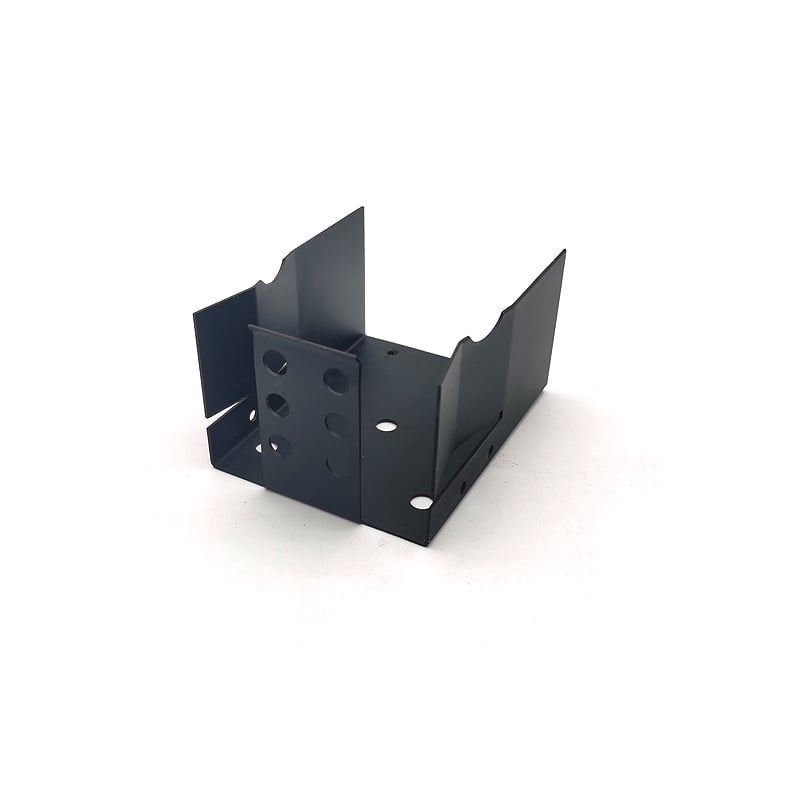
Traditional manufacturing methods often involve multiple machining operations, extensive material waste, and lengthy production cycles that drive up costs exponentially. Metal stamping parts eliminate many of these inefficiencies by creating near-net-shape components in a single operation. The process requires minimal secondary finishing, reducing labor costs and production time significantly. Material utilization rates in stamping operations typically exceed 85%, compared to machining processes that may waste 60% or more of the raw material through chips and cutoffs.
The initial tooling investment for metal stamping parts represents a higher upfront cost, but this expense is quickly amortized across large production volumes. Progressive dies and compound dies enable manufacturers to produce thousands of identical components with consistent quality, eliminating the variability and rework costs associated with manual operations. The predictable nature of stamping processes allows for accurate cost forecasting and budget planning, essential factors in competitive manufacturing environments.
Automation capabilities inherent in metal stamping operations significantly reduce direct labor requirements compared to traditional manufacturing methods. A single operator can often supervise multiple stamping presses running simultaneously, maximizing productivity while minimizing labor costs per unit. The reduced skill requirements for operating stamping equipment compared to precision machining also lower training costs and improve workforce flexibility.
Overhead costs decrease substantially when metal stamping parts replace assemblies requiring multiple components and joining operations. The ability to create complex geometries in single operations eliminates the need for secondary assembly processes, reducing handling costs, inventory requirements, and quality control checkpoints. Floor space utilization improves as stamping operations require less area per unit of output compared to traditional machining centers and assembly lines.
Modern metal stamping operations employ sophisticated nesting software that maximizes material utilization by optimizing part placement on sheet metal blanks. This technology can achieve material savings of 15-30% compared to conventional cutting methods, directly reducing raw material costs per component. The ability to process various material grades and thicknesses through the same equipment provides additional flexibility for cost optimization based on market conditions and material availability.
Scrap metal generated from stamping operations maintains higher value than machining waste because it consists of clean, uncontaminated metal that can be easily recycled. The geometric consistency of stamping scrap facilitates efficient collection and processing, often generating revenue streams that further offset production costs. Progressive stamping techniques minimize scrap generation through intelligent strip design that maximizes the number of parts per coil or sheet.
The inherent repeatability of metal stamping processes ensures consistent dimensional accuracy across large production runs, virtually eliminating costly rework and rejection rates. Precision tooling and process controls maintain tolerances within ±0.002 inches for most applications, exceeding the capabilities of many alternative manufacturing methods. This consistency reduces quality control costs and eliminates the need for extensive inspection procedures required with less predictable processes.
Statistical process control implementation in metal stamping parts production enables real-time monitoring of critical dimensions and characteristics. Early detection of process variations prevents the production of defective components, avoiding the substantial costs associated with field failures and warranty claims. The data-driven approach also facilitates continuous improvement initiatives that further reduce costs over time.
Modern stamping presses operate at speeds exceeding 1,500 strokes per minute for simple parts, dramatically reducing cycle times compared to alternative manufacturing methods. This rapid production capability enables manufacturers to meet tight delivery schedules while maintaining competitive pricing structures. The speed advantage becomes particularly pronounced in high-volume applications where even small cycle time reductions translate to substantial cost savings across the entire production run.
Transfer stamping systems can produce complex metal stamping parts through multiple forming operations in a continuous process, eliminating intermediate handling and setup times. This integrated approach reduces work-in-process inventory costs and minimizes the risk of damage or contamination between operations. The ability to complete complex components in seconds rather than minutes fundamentally changes the economics of precision metal part production.
The scalable nature of stamping operations allows manufacturers to adjust production volumes rapidly in response to market demand without proportional increases in setup costs or labor requirements. Additional shifts can be implemented with minimal incremental overhead, providing flexibility to capture market opportunities while maintaining cost competitiveness. This scalability advantage proves particularly valuable in industries with seasonal demand patterns or rapid product lifecycle changes.
Volume economics in metal stamping parts production create substantial competitive advantages through economies of scale. Fixed costs associated with tooling, setup, and process development are distributed across larger quantities, reducing per-unit costs significantly as volumes increase. The break-even point for stamping operations typically occurs at much lower volumes than alternative processes, making it viable for medium-volume applications previously restricted to expensive low-volume methods.
Metal stamping parts enable significant cost reductions through part consolidation, where multiple components can be combined into single stamped assemblies. This consolidation eliminates joining operations, reduces inventory complexity, and minimizes assembly labor requirements. The ability to create complex three-dimensional forms through progressive stamping operations opens new possibilities for functional integration previously requiring separate components and assembly processes.
Design for manufacturability principles applied to metal stamping parts often reveal opportunities to eliminate costly features while maintaining or improving functionality. Stamped features such as ribs, bosses, and mounting tabs can be formed simultaneously with the basic component geometry, adding functionality without additional processing steps. This integrated approach reduces both material and labor costs while improving structural performance in many applications.
High-quality stamping dies can produce millions of parts before requiring replacement, providing exceptional tooling life compared to other forming processes. The ability to amortize tooling costs across such large quantities makes stamping economically viable even for relatively simple components. Proper die maintenance and reconditioning programs can extend tool life further, maximizing the return on initial tooling investments.
Progressive die systems offer particular advantages for complex metal stamping parts by performing multiple operations in sequence without part transfer between stations. This approach minimizes tooling costs per operation while maintaining precise part-to-part consistency throughout the forming process. The investment in sophisticated progressive tooling pays dividends through reduced labor costs, improved quality, and faster production cycles across the entire product lifecycle.
The cold working process inherent in metal stamping operations improves the mechanical properties of formed components through work hardening effects. This strengthening can eliminate the need for expensive heat treatment operations while providing superior strength-to-weight ratios compared to cast or machined alternatives. The directional grain structure created during stamping enhances fatigue resistance and impact strength in critical loading directions.
Stress concentration factors in stamped components can be minimized through proper die design and forming sequences, improving service life and reliability compared to machined parts with sharp corners and stress risers. The ability to create smooth transitions and optimized geometries during the forming process eliminates costly secondary operations typically required to achieve similar performance characteristics through traditional manufacturing methods.
Metal stamping parts typically exhibit superior surface finish quality straight from the forming operation, reducing or eliminating secondary finishing requirements. The smooth, consistent surface produced by properly maintained tooling provides excellent substrate preparation for painting, plating, or other coating applications. This finish quality advantage translates to lower coating material consumption and improved coating adhesion compared to rougher machined surfaces.
Pre-coated materials can be successfully formed in many stamping applications, eliminating expensive post-processing coating operations entirely. Zinc-coated, painted, and laminated materials maintain their protective properties through most stamping operations when proper forming techniques are employed. This capability enables significant cost savings by incorporating surface protection into the raw material specification rather than adding it through separate processing steps.
Cost savings from implementing metal stamping parts typically range from 20-60% compared to traditional machining methods, depending on part complexity and production volume. The greatest savings occur in high-volume applications where tooling costs can be amortized across large quantities. Material savings of 15-30% are common due to improved nesting and reduced waste generation. Labor cost reductions of 40-70% per part are achievable through automation and reduced cycle times.
Production volume has a dramatic impact on stamping economics due to the high initial tooling costs that must be amortized across the production run. Break-even volumes typically occur between 5,000-50,000 parts depending on complexity and tooling requirements. Above these volumes, per-unit costs decrease significantly as fixed costs are distributed across more parts. Very high volumes of 500,000+ parts often justify sophisticated progressive tooling that can reduce per-unit costs to fractions of alternative methods.
Key evaluation factors include production volume requirements, part complexity, dimensional tolerances, material specifications, and delivery timeline constraints. Initial tooling investment must be weighed against long-term per-unit cost savings and quality benefits. Secondary operations requirements, material utilization efficiency, and automation potential significantly impact total cost comparisons. Design flexibility and future modification capabilities should also be considered for products with evolving requirements.
Quality improvements from metal stamping parts reduce costs through elimination of rework, reduced inspection requirements, and lower warranty claims. Consistent dimensional accuracy minimizes assembly problems and improves fit-up with mating components. The repeatability of stamping processes enables statistical process control implementation, preventing defects before they occur. Improved mechanical properties from cold working often eliminate expensive heat treatment operations while enhancing service life and reliability.

 EN
EN