In sterile medical disposables, even a micron-level deviation can compromise device function or patient safety. Precision injection molding demands mold designs capable of holding tolerances as tight as ±0.005 mm—achieved through advanced CNC machining, real-time process monitoring, and full alignment with ISO 13485 quality management requirements. Before production launch, manufacturers conduct Design of Experiments (DOE) to empirically determine optimal melt temperature, injection speed, and packing pressure. These parameters are then locked in via Installation Qualification (IQ), Operational Qualification (OQ), and Performance Qualification (PQ) protocols. Every production run undergoes in-process gauging and statistical process control (SPC), ensuring consistent geometry, surface finish, and functional integrity across millions of units.
Material selection is equally critical: only USP Class VI–certified resins meet the biocompatibility standards required for direct patient contact. These polymers pass rigorous testing for cytotoxicity, sensitization, and hemolysis—and retain mechanical stability after gamma irradiation doses up to 50 kGy, the industry standard for terminal sterilization. Common selections include medical-grade polycarbonate, ABS, and polypropylene, chosen not only for clarity and strength but for proven resistance to degradation under sterilization conditions. When paired with validated molding processes, these resins ensure plastic injection parts remain non-toxic, dimensionally stable, and functionally reliable throughout their shelf life—forming the dual foundation of safety and precision in sterile disposables.
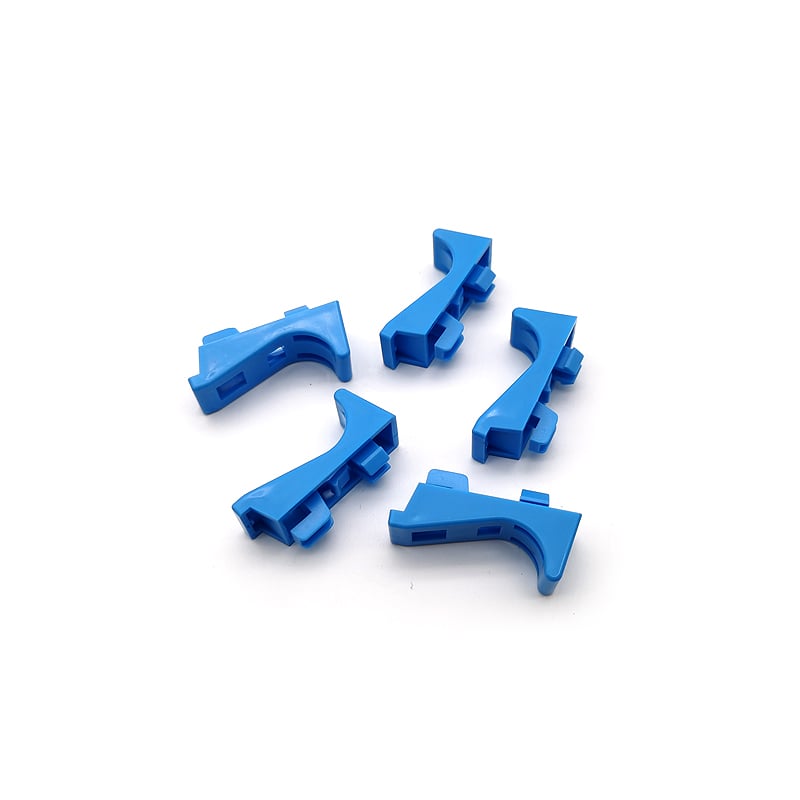
Regulatory compliance is non-negotiable for plastic injection parts used in medical devices. Harmonized adherence to FDA 21 CFR Part 820 and the EU’s Medical Device Regulation (MDR) ensures end-to-end accountability—from initial mold qualification through final lot release. Compliant manufacturers embed validation rigor at every stage: IQ/OQ/PQ protocols verify equipment and process capability; material traceability extends beyond resin certification to cavity-specific cycle data and electronic device history records (eDHRs). This granular documentation creates an auditable, real-time trail that reduces recall risk by over 47%, strengthens liability protection, and directly supports patient safety outcomes. Industry analysis shows manufacturers investing approximately $740k annually in robust documentation systems—not as overhead, but as essential risk mitigation.
Scaling from pilot to high-volume production hinges on agility and precision. Lean mold changeover—particularly SMED (Single-Minute Exchange of Die)—reduces setup time by up to 65%, enabling rapid transitions between product lines without sacrificing output continuity. This efficiency is amplified by multi-cavity tooling: molds engineered for 8-, 16-, or even 32-cavity operation deliver identical, high-fidelity parts per cycle while maintaining ±0.01 mm tolerance control—critical for Class II disposables with snap-fit interfaces or microfluidic channels.
| Transition | Changeover Optimization | Cavity Utilization |
|---|---|---|
| Prototype (<5k) | Quick-release mounting systems | Single-cavity verification |
| Mid-volume (100k) | Automated clamping sequences | 4–8 cavity configurations |
| High-volume (5M+) | SMED implementation | 16–32 cavity tooling |
This strategic progression enables seamless ramp-up from 1,000-unit pilots to annual volumes exceeding five million units—while sustaining cost discipline: full-scale production achieves ~40% lower per-unit costs versus conventional methods. Crucially, scalability does not dilute precision; instead, it integrates tolerance control, regulatory traceability, and material integrity into a unified, responsive manufacturing system.

 EN
EN