Focusing solely on part unit price is a common but costly oversight in high-volume procurement. Total Cost of Ownership (TCO) captures the full financial impact across a plastic injection part’s lifecycle—including tooling, material consumption, cycle efficiency, scrap, rework, and quality-related downtime. Research from Phillipstool (2024) confirms that these operational and systemic costs often dwarf per-unit price differences. For instance, low-variability manufacturing and high machine utilization reduce cost per thousand parts not by cutting material spend, but by minimizing waste and unplanned stoppages—directly improving ROI.
Upfront mold investment is the most consequential TCO lever. Steel tooling demands higher initial capital but delivers lower lifetime cost for high-volume runs due to exceptional durability and dimensional stability. Aluminum molds offer faster prototyping and lower entry cost—but their limited lifespan (typically 10,000–50,000 cycles) makes them unsuitable beyond short-to-mid production volumes. The break-even point hinges on volume, part complexity, and required tolerances:
| Mold Type | Initial Cost (Typical) | Expected Lifespan (Cycles) | Ideal Application Volume |
|---|---|---|---|
| Steel | $15,000 – $70,000+ | 500,000+ | 100,000 parts |
| Aluminum | $3,000 – $18,000 | 10,000 – 50,000 | < 50,000 parts |
For runs exceeding 100,000 parts, steel tooling—not only extends mold life but also enables multi-cavity configurations that further amortize tooling cost per part. At scale, TCO optimization shifts decisively toward maximizing uptime, repeatability, and first-pass yield rather than minimizing initial capital outlay.
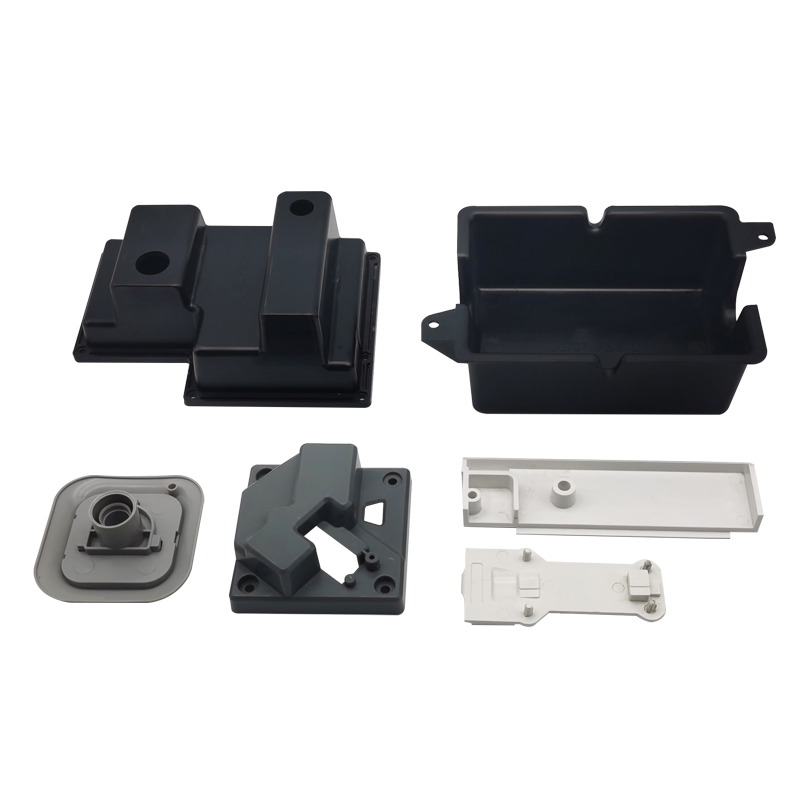
Selecting a supplier with proven, integrated capabilities is foundational to achieving predictable TCO. Non-negotiable criteria include automation maturity, precision engineering rigor, and—if applicable—cleanroom compliance aligned with ISO 14644 standards. Fully automated cells reduce manual intervention, improve throughput consistency, and cut labor-dependent error rates—critical for high-volume, tight-tolerance applications like automotive assemblies or medical device components. Precision instrumented mold design ensures repeatable dimensional accuracy within ±0.02 mm tolerances, directly supporting fit-and-function requirements in electronics enclosures and safety-critical systems. When producing parts for regulated sectors—such as implantables or food-contact packaging—certified cleanroom environments aren’t optional; they’re mandated by FDA and EU MDR frameworks and serve as tangible proof of process control and contamination mitigation.
Sustainability is no longer a niche add-on—it’s an embedded TCO lever in modern high-volume injection molding. Leading manufacturers integrate bio-based resins like Polylactic Acid (PLA) and Polyhydroxyalkanoates (PHA) into production without sacrificing mechanical performance or cycle time. These materials deliver competitive tensile strength and thermal stability while reducing reliance on fossil feedstocks and lowering carbon intensity—especially impactful at million-part volumes. Equally strategic is closed-loop recycling: advanced facilities regrind runners, sprues, and nonconforming parts into reusable pellets within the same production line, converting what was once 5–10% scrap into feedstock. This practice cuts net resin cost per part and reduces landfill liability—turning environmental responsibility into measurable operational savings.
Design decisions made early—before tooling—have outsized influence on long-term TCO. Thin-wall molding reduces material use and accelerates cooling without compromising structural integrity, especially valuable in consumer electronics housings and disposable medical trays. Conformal cooling channels, machined via EDM or additive manufacturing to mirror part geometry, cut cycle times by up to 40% and significantly suppress warpage and sink marks. Strategic gate placement—guided by mold flow simulation—ensures uniform cavity fill, minimizes knit lines, and eliminates short shots. Together, these DFM techniques lower defect rates, reduce secondary operations, and increase machine utilization—all contributing directly to lower per-part cost over high-volume production.
Material selection must align precisely with functional, regulatory, and economic requirements—not just nominal specifications. Polypropylene (PP) excels in fatigue resistance for automotive interior clips and living hinges; ABS balances impact strength, surface finish, and ease of plating for electronics enclosures; HDPE provides FDA-compliant chemical resistance for medical containers; polystyrene (PS) offers rigidity and clarity for diagnostic labware; and engineering thermoplastics like polycarbonate (PC) and polyamide 6 (PA6) deliver heat resistance and dimensional stability for under-hood connectors and surgical instrument handles. Matching material properties to application demands prevents over-engineering—avoiding unnecessary cost premiums while ensuring reliability and compliance across the product lifecycle.
1. What factors influence the Total Cost of Ownership (TCO) in plastic injection parts production?
The TCO includes tooling costs, material consumption, cycle efficiency, scrap rates, rework, quality-related downtime, and operational efficiencies. Focusing solely on unit price omits these critical, indirect costs.
2. Why is steel tooling preferred for high-volume production?
Steel tooling offers exceptional durability, dimensional stability, and extended lifespan, making it cost-effective for runs exceeding 100,000 parts. It also supports multi-cavity configurations, further reducing per-part costs over time.
3. How does automation affect supplier selection?
Automation reduces manual intervention, enhances consistency, and decreases labor-dependent errors. For high-volume, tight-tolerance applications, suppliers with advanced automation ensure more predictable TCO outcomes.
4. What is DFM, and why is it important?
Design for Manufacturability (DFM) involves optimizing part designs for production efficiency. Techniques like thin-wall molding, conformal cooling, and gate optimization reduce defects, cycle time, and material usage, improving long-term TCO.
5. How do bio-based resins contribute to sustainability?
Bio-based resins like PLA and PHA reduce reliance on fossil resources and lower carbon intensity. When paired with closed-loop recycling, they also decrease scrap and landfill dependency, embedding sustainability into production.

 EN
EN