Design for Manufacturability (DFM) proactively optimizes part geometry to minimize injection molding tooling expenses. Streamlined contours—achieved by eliminating internal corners, unnecessary ribs, and nonfunctional surface textures—reduce mold complexity and CNC machining time. Undercuts necessitate costly side actions or collapsible cores, increasing both mold cost and maintenance demands. Removing them enables simpler, more robust mold structures that remain economical across multi-year production lifetimes.
DFM-driven simplification can reduce tooling costs by up to 50% versus non-optimized designs. Flat contours and consistent profiles shorten cycle times by minimizing mold movement, while avoiding internal threads eliminates complex core mechanisms. This approach also enhances long-term tool reliability—uniform ejection forces and reduced mechanical stress extend mold service life without compromising part functionality.
Uniform wall thickness (typically 1.5–4 mm) ensures balanced melt flow and cooling, preventing warpage and sink marks in plastic injection parts. Consistent cross-sections promote predictable solidification, reducing the need for over-engineered cooling channels and minimizing trial-and-error adjustments during mold commissioning. Likewise, draft angles of at least 1° per side enable reliable part ejection—reducing binding, scrap, and wear on cavity surfaces.
Because uniform walls eliminate differential shrinkage across features, mold designers avoid costly compensation iterations during steel cutting. This consistency directly lowers fabrication risk, accelerates first-article validation, and supports tighter process control throughout high-volume production runs.
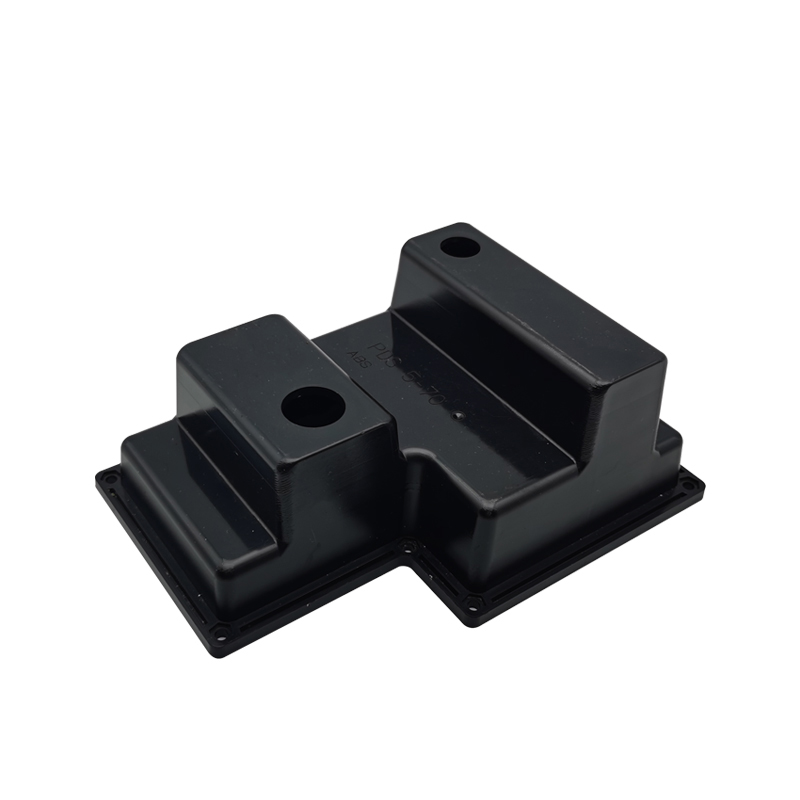
Strategic mold architecture is a cornerstone of cost-effective plastic injection parts manufacturing. Two proven approaches—multi-cavity and family molds—distribute upfront tooling investment across higher output volumes or broader product families, delivering measurable ROI through amortization and operational efficiency.
Multi-cavity molds produce identical parts simultaneously within a single mold base—multiplying output per cycle without proportionally increasing labor or machine time. For production volumes exceeding 40,000 units per month, this configuration delivers compelling economics despite higher initial mold complexity. Critical to success is precise gate and runner balancing, which ensures uniform cavity filling, dimensional repeatability, and cycle times as low as 20 seconds per shot.
Family molds consolidate the production of geometrically compatible—but functionally distinct—plastic injection parts (e.g., housings, covers, and brackets in an assembly) into one mold. This eliminates sequential tool changes and synchronizes material behavior across components, ensuring matched shrinkage, color consistency, and thermal performance. Base standardization cuts total tooling development time by up to 35%, while modular insert capability allows future design updates without full mold replacement. Real-world implementations—such as two-cavity family molds for connector systems—have demonstrated 45% inventory reduction and improved supply chain responsiveness.
Mold flow analysis serves as a critical pre-fabrication checkpoint—identifying potential defects before steel is cut. By simulating filling dynamics, cooling uniformity, weld line formation, and air entrapment, engineers validate moldability and refine gate locations, runner layouts, and venting strategies in virtual space. According to Ponemon Institute’s 2023 study, manufacturers using simulation-driven design achieve $740k in average annual rework savings, while top-tier adopters report first-run defect reductions of 4.2–15% following analysis-guided adjustments.
This predictive capability transforms tooling development from reactive correction to proactive precision—shortening time-to-market, lowering qualification risk, and reinforcing engineering confidence in production readiness.
Modular tooling systems lower the barrier to entry for low- and medium-volume plastic injection parts production by decoupling the reusable mold base from application-specific inserts. Rather than building custom molds end-to-end, manufacturers invest in standardized frames—then fabricate only the cavity and core inserts needed for each part. This strategy slashes lead times, reduces raw material waste, and spreads capital expenditure across multiple programs.
Master Unit Die (MUD) systems exemplify this philosophy: a universal mold base accepts small, replaceable inserts tailored to individual part geometries. When launching a new plastic injection part—or iterating on an existing one—only the insert requires redesign and machining. Engineers rapidly evaluate multiple configurations in the same base, accelerating prototyping and reducing the cost of design refinement. For short-run or configurable products, MUD systems deliver scalable precision without sacrificing tolerance control. Maintenance is simplified too: worn or damaged inserts are swapped individually, preserving the integrity and longevity of the primary mold frame.
Design for Manufacturability (DFM) is a proactive approach to optimize part geometry and simplify manufacturing processes, which helps reduce tooling costs and improve overall production efficiency.
Draft angles help eject parts reliably from the mold while preventing wear and scrap, whereas uniform wall thickness ensures balanced melt flow, cooling consistency, and predictable solidification, reducing warpage and defects.
Multi-cavity molds produce identical parts simultaneously, optimizing high-volume production, while family molds manufacture geometrically compatible but distinct parts in a shared mold base, enhancing efficiency for related products.
Mold flow analysis validates mold design by simulating filling, cooling, and venting dynamics to identify potential defects and optimize tooling, reducing rework and ensuring production readiness.
Modular tooling systems use reusable mold bases with interchangeable inserts, enabling rapid adaptation to new designs while reducing lead times, material waste, and capital costs.

 EN
EN