Original Equipment Manufacturers (OEMs) face mounting pressure to reduce vehicle weight—directly improving EV range, energy efficiency, and regulatory compliance. Aluminum extrusion profiles deliver the optimal balance of strength, durability, and lightweight performance—making them indispensable for battery enclosures, structural frames, and thermal management systems. These enclosures protect high-voltage components while integrating passive cooling features directly into the profile geometry. Industry forecasts project a 40% increase in aluminum use across EV platforms by 2026, driven by tightening emissions standards and evolving safety requirements. Advanced extrusion technology enables complex, near-net-shape geometries with high dimensional fidelity—critical for safety-critical applications where precision impacts assembly, crash performance, and long-term reliability.
Aluminum extrusion delivers exceptional structural efficiency without trade-offs in safety or total cost of ownership. Its superior strength-to-weight ratio outperforms steel alternatives while enabling hollow, multi-chambered sections that reduce material usage without sacrificing rigidity. Integrated design features—such as internal cooling channels, mounting bosses, and gasket grooves—are built directly into the profile, eliminating secondary operations and reducing part count. Certified alloys like 6061-T6 and 6005A meet automotive-grade mechanical and weldability requirements, with crash testing confirming effective energy absorption during impact events. Lifecycle advantages include inherent corrosion resistance, extended service life, and full recyclability—lowering maintenance, replacement, and end-of-life costs. When optimized early in vehicle development, extruded aluminum solutions often reduce both upfront tooling investment and downstream assembly complexity.
A strategic aluminum extrusion partner must engage as a co-design collaborator—not just a supplier—from concept through validation. This includes supporting design-for-extrusion (DFE) analysis to optimize geometry for manufacturability, minimize die wear, and avoid costly redesign cycles. Precision tolerancing is mission-critical: for battery enclosures and structural rails, deviations beyond ±0.1 mm can impede module integration or compromise sealing integrity. Leading partners maintain process control systems validated to ISO/TS 16949 and provide mill test reports traceable to ASTM B221 (standard specification for aluminum-alloy extruded bars, rods, wire, profiles, and tubes) and ASTM B917 (standard practice for heat treatment of aluminum-alloy extrusions). Alloy selection is deliberate—6061-T6 for high-strength structural applications, 6005A for complex hollows requiring consistent weldability—and certified per batch to ensure repeatability under thermal and mechanical load.
Technical excellence loses value without operational execution. OEMs require partners with documented APQP discipline and PPAP Level 3 or 4 submission capability—ensuring every production release meets automotive quality gates, including dimensional validation, material certification, and process capability studies (Cpk ≥1.33). Scalable capacity must span prototyping (hundreds of meters) to volume ramp (millions of meters annually), with flexible die banks and rapid changeover protocols. On-time delivery performance exceeding 98% reflects not just logistics but embedded resilience—real-time shop-floor monitoring, buffer inventory strategies, and contingency planning for raw material volatility. Since a single extrusion line stoppage can idle an entire vehicle assembly plant—costing upwards of $1M/hour—sourcing contracts should formalize capacity commitments, escalation protocols, and audit rights before launch.
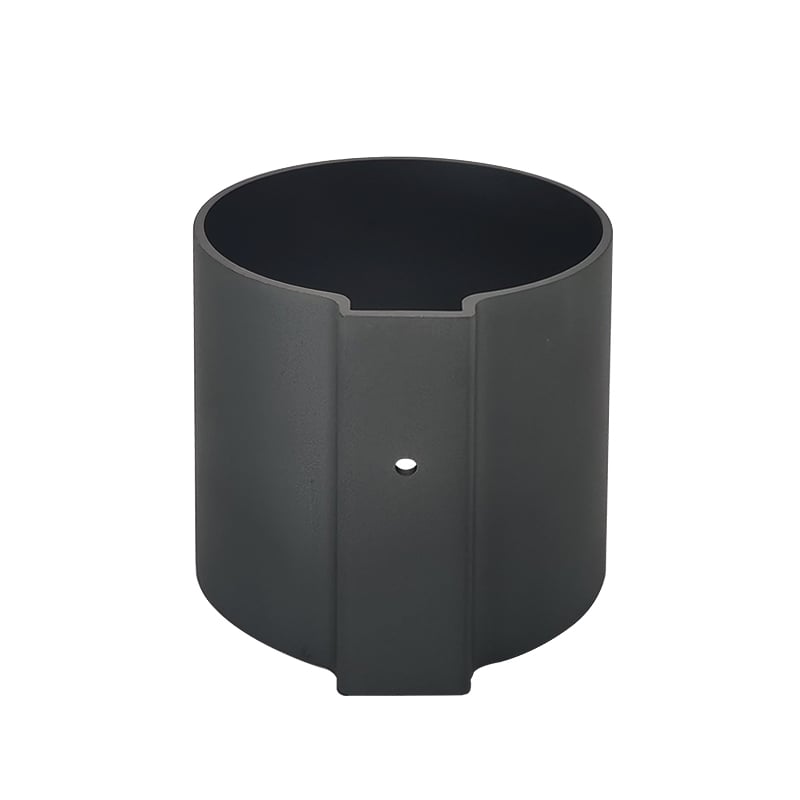
Overreliance on single-region supply chains exposes OEMs to tariff volatility, port congestion, and geopolitical instability. Regionalized sourcing—such as nearshoring extrusion capacity to Mexico for North American assembly or establishing certified facilities in India for APAC markets—cuts lead times by 30–50%, reduces landed cost, and strengthens responsiveness to demand shifts. Dual-sourcing critical profiles—like battery enclosure rails or crash-absorbing front-end structures—ensures continuity when one facility faces disruption. The most resilient models combine U.S.- or EU-based engineering oversight with ASI-certified manufacturing in lower-risk jurisdictions, preserving technical alignment while diversifying physical risk. This approach supports just-in-time delivery without sacrificing the micron-level tolerancing or alloy consistency required for automotive integration.
Traceability is no longer optional—it’s foundational to brand integrity and regulatory compliance. OEMs now mandate full chain-of-custody documentation covering bauxite origin, smelting energy source (e.g., hydro vs. coal-powered), ingot casting, and final extrusion. Third-party verification—particularly Aluminium Stewardship Initiative (ASI) Performance Standard and Chain-of-Custody certification—is increasingly required in procurement RFPs, especially for vehicles sold in the EU or California. Integrating these expectations into supplier contracts ensures accountability at every tier and aligns with emerging due diligence laws like the EU Corporate Sustainability Due Diligence Directive (CSDDD). Dual-sourcing with at least one ASI-certified provider strengthens both ethical assurance and operational redundancy—turning sustainability from a compliance item into a strategic differentiator.
Sustainability now ranks equally with cost and quality in aluminum extrusion sourcing decisions. Regulatory mandates—including the EU’s Digital Product Passport and upcoming U.S. federal procurement rules—are driving minimum recycled content requirements (e.g., 50% post-consumer aluminum by 2030 for certain vehicle components). Leading extruders meet this demand with certified recycled alloys—6061-T6 and 6005A grades containing up to 95% post-industrial or post-consumer scrap—without compromising tensile strength, elongation, or fatigue resistance. A true circular model goes beyond scrap reuse: it includes closed-loop billet remelting, in-plant scrap recovery, and digital billet tracking from recycling furnace to finished profile. OEMs evaluating partners should request audited annual sustainability reports, verified recycled content percentages per alloy grade, and evidence of upstream bauxite-to-billet traceability. Embedding these requirements into supplier agreements transforms aluminum sourcing into a measurable lever for net-zero targets—and positions lightweighting as both an engineering and environmental imperative.
Aluminum is lightweight yet strong, which helps improve EV range and energy efficiency. It also offers benefits like corrosion resistance, recyclability, and thermal management, making it indispensable for battery enclosures and other critical components.
Common alloys include 6061-T6 for high-strength applications and 6005A for complex, weldable shapes. These certified alloys meet automotive-grade mechanical and weldability requirements.
Aluminum extrusions utilize recycled content and enable closed-loop production models, helping meet regulatory mandates for reduced carbon footprints and circular economy integration.
Traceability ensures compliance with ethical and regulatory standards by documenting the complete lifecycle of aluminum from bauxite origin to extrusion, which is increasingly demanded by OEMs.
Dual-sourcing mitigates risks like geopolitical instability and supply chain disruptions, ensuring continuity of critical components such as battery enclosures and structural rails.

 EN
EN