Each core process in precision sheet metal fabrication serves a distinct role in high‑volume production. Laser cutting delivers speed and repeatability for complex contours—ideal for thin to moderate gauges—but slows significantly on thicker materials due to thermal limitations. CNC press brake bending ensures consistent angles across thousands of parts, though spring-back variation demands precise tooling setup and material-specific compensation. Stamping achieves the fastest cycle times for bulk orders but carries high upfront die costs and limited flexibility for design revisions. Water jet cutting excels with heat-sensitive or non-conductive materials (e.g., titanium, composites) by eliminating heat-affected zones, yet its slower speed makes it less economical than laser for standard carbon steels and aluminum at scale. For optimal cost-per-part in volume production, engineers often combine processes—using stamping for primary features and laser for secondary details—to balance speed, precision, and adaptability.
Consistent repeatability across bulk runs demands more than nominal specifications—it requires statistically validated control. A geometric tolerance of ±0.05 mm is widely adopted as the benchmark for precision sheet metal assemblies, ensuring interchangeability without rework or fit-up labor. But specification alone is insufficient: the process capability index (Cpk) must be ≥1.33. This metric confirms that natural process variation remains well within tolerance limits—even under extended run conditions—reducing the probability of out-of-spec parts to fewer than 63 per million. Suppliers who maintain both standards demonstrate proven control over machine calibration, material consistency, and operator training. Without this dual validation, minor drifts in tool wear or environmental conditions can cascade into scrap rates that jeopardize just-in-time delivery and contract compliance.
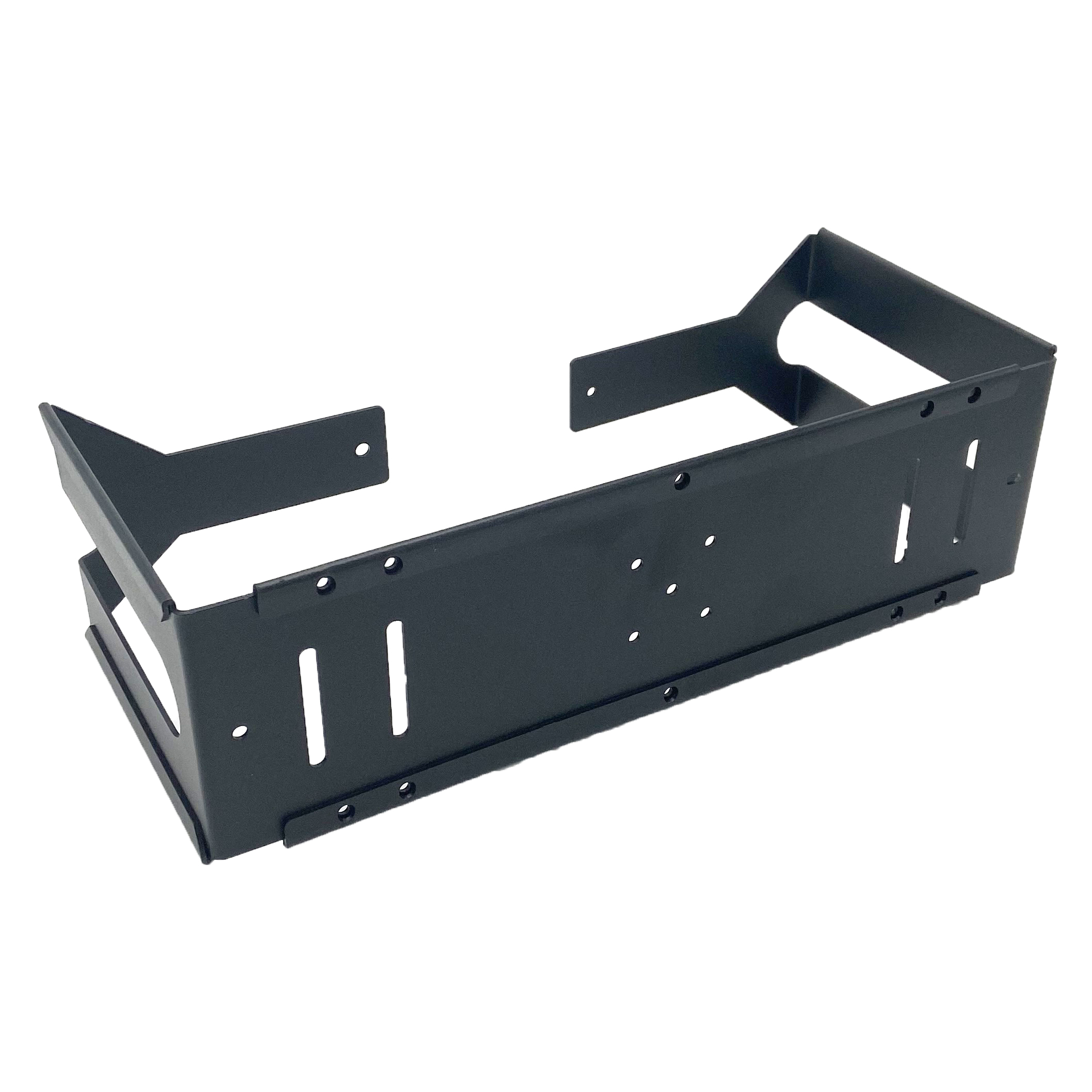
Implementing DFM principles early avoids costly downstream corrections—research from the National Institute of Standards and Technology (NIST) shows that 75% of manufacturing issues originate in design decisions. For scalable sheet metal production, three rules are foundational: First, bend radii should equal or exceed material thickness to prevent micro-cracking and spring-back inconsistencies during high-cycle forming. Second, hole-to-edge clearance must be at least twice the material gauge to avoid distortion during punching or laser piercing. Third, maintaining uniform material thickness across all part variants eliminates repeated press brake setup changes and reduces tooling wear. Together, these practices cut setup time by up to 40%, lower scrappage by 25%, and support stable Cpk performance across multi-thousand-part batches.
Geometric Dimensioning and Tolerancing (GD&T) transforms engineering intent into unambiguous production instructions—critical when scaling to zero-defect targets. Rather than relying on generic ±0.05 mm callouts, GD&T defines functional relationships (e.g., position, perpendicularity, profile) tied directly to assembly requirements. When paired with digitally integrated CAD-to-shopfloor workflows—where annotated models feed directly into CNC controllers—GD&T eliminates manual interpretation errors in laser path generation or bend programming. Industry data from the American Society of Mechanical Engineers (ASME) indicates certified GD&T implementation reduces dimensional disputes by 90% and cuts first-article approval cycles by half. In regulated sectors like aerospace and medical device manufacturing, this alignment isn’t optional: it’s the foundation of traceable, auditable, and repeatable bulk production.
Certifications signal foundational competence—but only traceability proves execution at scale. AS9100D certification validates aerospace-grade process discipline, while ISO 9001:2015 confirms adherence to internationally recognized quality management systems. Yet for high-volume contracts, real-time ERP integration matters more than audit history alone: suppliers who track material lot numbers, machine parameters, and inspection results end-to-end reduce delivery delays by 47% by identifying root causes before final inspection. Look for vendors whose ERP systems trigger automatic alerts when key metrics—such as bend angle deviation or surface finish variance—approach ±0.05 mm tolerance thresholds. Digitally documented workflows also reduce human-error defects by 29%, according to a 2023 study by the Precision Metalforming Association (PMA), making them essential for sustaining Cpk ≥1.33 across long production runs.
Integrated value-add services compress lead times and preserve dimensional integrity across complex assemblies. Suppliers offering automated MIG/TIG welding, powder coating, and passivation—all under one roof—eliminate at least three external handoffs per part, each introducing risk of misalignment, contamination, or rework. More critically, in-house functional testing—such as pressure decay validation for fluidic housings or electrical continuity checks for EMI enclosures—ensures 99.2% first-pass yield in volume production. This level of vertical integration doesn’t just accelerate delivery; it maintains tight control over critical interfaces between fabricated subassemblies, preventing cumulative tolerance stack-up that compromises final assembly fit and function.
Material selection directly impacts the success of high-volume sheet metal fabrication projects. Choosing wisely involves balancing three key factors:
Understanding this tri-fold relationship ensures scalability and reliability in production.
Precision sheet metal fabrication refers to a set of manufacturing processes aimed at producing highly accurate metal components, typically for high-volume applications. Processes include laser cutting, bending, stamping, and water jet cutting.
A ±0.05mm tolerance ensures that parts are interchangeable and reduces rework, optimizing both efficiency and quality. It also minimizes variance, which is essential for maintaining repeatability at scale.
GD&T improves dimensional accuracy and facilitates zero-error production by directly translating design requirements into unambiguous manufacturing instructions. It also reduces interpretation errors and streamlines approval processes.
Certifications like AS9100 and ISO 9001 validate a supplier's quality management and manufacturing standards, ensuring their processes are consistent, reliable, and suitable for high-volume production.
Material selection affects performance, formability, and cost. Choosing the right material ensures the product meets functional requirements while remaining economical and scalable for large-scale production.

 EN
EN