Manufacturing industries worldwide continue to seek efficient methods for producing high-quality metal components at scale. Among the various manufacturing processes available, aluminum die casting stands out as a superior technique that delivers exceptional precision and consistency in mass production environments. This advanced manufacturing method combines speed, accuracy, and cost-effectiveness to create complex metal parts with tight tolerances and superior surface finishes.
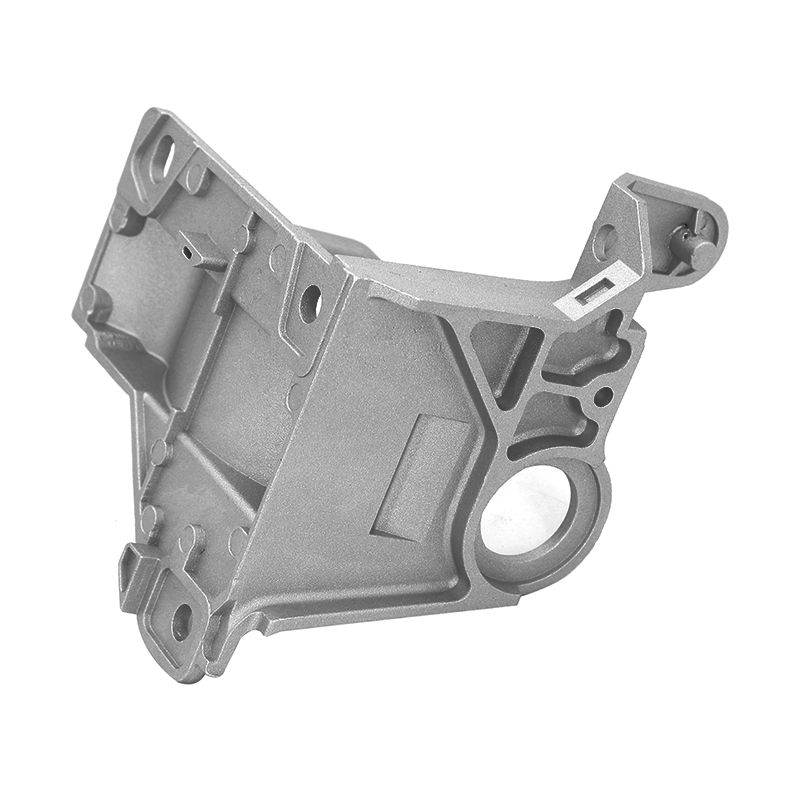
The precision achieved through aluminum die casting processes stems from carefully controlled variables including temperature management, pressure application, and mold design optimization. Modern die casting facilities utilize sophisticated equipment and monitoring systems that ensure consistent results across thousands of production cycles. This reliability makes the process particularly valuable for industries requiring identical components with minimal variation between individual parts.
The aluminum die casting process begins with melting aluminum alloys to precise temperatures, typically ranging from 1200 to 1400 degrees Fahrenheit. Molten aluminum is then injected under high pressure into steel molds, known as dies, which contain the negative impression of the desired part geometry. The high pressure ensures complete filling of intricate details while minimizing porosity and achieving dense, uniform material properties throughout the casting.
Advanced injection systems control the flow rate and pressure curves during metal injection, allowing manufacturers to optimize fill patterns and reduce turbulence. This controlled approach prevents air entrapment and ensures consistent wall thickness across complex geometries. The rapid cooling that occurs within the steel die creates fine grain structures that enhance mechanical properties and dimensional stability of the finished components.
Aluminum alloys used in die casting offer excellent strength-to-weight ratios, corrosion resistance, and thermal conductivity properties. Common alloys include A380, A383, and A390, each formulated for specific performance characteristics and casting requirements. The selection of appropriate alloy compositions directly impacts the precision and quality of mass-produced components, with different alloys offering varying levels of fluidity, shrinkage rates, and mechanical properties.
The inherent properties of aluminum make it ideal for precision applications where dimensional accuracy is critical. Low shrinkage rates during solidification help maintain tight tolerances, while the material's excellent machinability allows for secondary operations when required. These characteristics enable manufacturers to achieve consistent results across large production volumes while maintaining stringent quality standards.
Precise temperature control represents a cornerstone of successful aluminum die casting operations. Modern facilities employ sophisticated heating and cooling systems that maintain optimal metal temperatures throughout the production cycle. Consistent melt temperatures ensure uniform flow characteristics and prevent premature solidification that could compromise part integrity or dimensional accuracy.
Die temperature management plays an equally important role in precision control. Heating and cooling channels within the die structure allow operators to regulate cooling rates and solidification patterns. This controlled cooling prevents warpage and distortion while promoting uniform material properties across the entire casting. Advanced temperature monitoring systems provide real-time feedback that enables immediate adjustments when deviations occur.
High-pressure injection systems form the heart of precision die casting operations. These systems generate pressures ranging from 1500 to 25000 PSI, forcing molten aluminum into every detail of the die cavity. The ability to precisely control injection pressure and velocity allows manufacturers to optimize fill patterns for specific part geometries while minimizing defects such as cold shuts or incomplete fills.
Multi-stage injection profiles enable operators to adjust pressure curves throughout the filling process. Initial low-pressure phases ensure smooth cavity filling, while subsequent high-pressure stages compress the metal and eliminate porosity. This sophisticated pressure management contributes significantly to the dimensional consistency and mechanical properties of mass-produced components.
Modern aluminum die casting facilities integrate advanced metrology equipment to verify dimensional accuracy and maintain quality standards. Coordinate measuring machines, optical comparators, and laser scanning systems provide precise measurements of critical dimensions and geometric tolerances. These inspection technologies enable real-time quality monitoring and immediate process adjustments when deviations are detected.
Statistical process control methods analyze measurement data to identify trends and predict potential quality issues before they impact production. This proactive approach to quality management ensures consistent precision across extended production runs while minimizing waste and rework. Automated inspection systems can verify multiple dimensions simultaneously, providing comprehensive quality data for each produced component.
The precision of aluminum die casting operations depends heavily on the accuracy and condition of the production dies. Computer-aided design software enables engineers to optimize die geometries for specific part requirements while accounting for material shrinkage and thermal effects. Advanced machining techniques create dies with extremely tight tolerances that transfer directly to the finished castings.
Regular die maintenance programs preserve dimensional accuracy throughout extended production campaigns. Preventive maintenance schedules include cleaning, inspection, and refurbishment activities that maintain die condition and prevent degradation of casting quality. Modern dies incorporate wear-resistant coatings and hardened surfaces that extend service life while maintaining precision over millions of casting cycles.
Efficient mass production requires careful optimization of cycle times while maintaining precision standards. Die casting cycles typically range from 30 seconds to several minutes, depending on part size and complexity. Engineers analyze each phase of the casting cycle to identify opportunities for time reduction without compromising quality or dimensional accuracy.
Automated systems coordinate multiple operations simultaneously, including die preparation, metal injection, cooling, and part extraction. This parallel processing approach maximizes equipment utilization while ensuring consistent timing across all production cycles. Precise timing control prevents premature die opening that could cause part distortion or incomplete solidification.
Advanced automation systems enhance both precision and productivity in aluminum die casting operations. Robotic systems handle parts with consistent positioning accuracy, eliminating human variability that could impact dimensional consistency. Automated ladling and pouring systems maintain precise metal volumes and temperatures while reducing operator exposure to hazardous conditions.
Integrated manufacturing systems coordinate multiple die casting machines and auxiliary equipment through centralized control systems. This coordination enables synchronized production schedules and optimized material flow throughout the facility. Real-time monitoring systems track performance metrics and automatically adjust process parameters to maintain optimal precision levels.
The automotive industry represents the largest consumer of aluminum die casting services, utilizing this technology for engine blocks, transmission cases, and structural components. The precision achievable through modern die casting processes enables manufacturers to meet stringent automotive quality standards while reducing vehicle weight and improving fuel efficiency.
Critical automotive components require dimensional tolerances measured in hundredths of millimeters, achievable through optimized aluminum die casting processes. The ability to produce millions of identical components with consistent properties makes this technology essential for automotive mass production requirements. Additionally, the excellent surface finish quality often eliminates the need for secondary machining operations.
Electronics manufacturers rely on aluminum die casting for producing heat sinks, housings, and structural components that require precise dimensions and excellent thermal properties. The process enables creation of complex internal geometries and thin-wall sections that would be difficult to achieve through other manufacturing methods. Electromagnetic shielding properties of aluminum castings provide additional benefits for electronic applications.
Aerospace applications demand the highest levels of precision and quality, with zero tolerance for dimensional deviations or material defects. Aluminum die casting processes can achieve the stringent requirements of aerospace components while providing the strength and weight advantages essential for aircraft applications. Advanced quality control systems ensure every casting meets or exceeds aerospace industry standards.
Modern aluminum die casting processes can consistently achieve tolerances of plus or minus 0.003 inches on most dimensions, with some specialized applications reaching even tighter tolerances. The actual achievable tolerance depends on part geometry, size, and alloy selection, but mass production typically maintains dimensional consistency within 0.005 inches across thousands of parts.
Aluminum die casting offers superior precision compared to sand casting or permanent mold casting while being more cost-effective than machining from solid billets for complex geometries. The process combines the precision of machined components with the efficiency of near-net-shape manufacturing, making it ideal for high-volume production requirements.
Die condition and design quality represent the most critical factors affecting precision in aluminum die casting operations. Additionally, consistent temperature control, pressure management, and material quality directly influence dimensional accuracy. Regular maintenance and process monitoring ensure these factors remain optimized throughout production runs.
Well-maintained aluminum die casting dies can produce hundreds of thousands to millions of precise parts before requiring refurbishment. Die life depends on part geometry, production volume, and maintenance practices, but modern dies with proper care can maintain precision specifications for extended production campaigns lasting several years.

 EN
EN