Manufacturing precision has become the cornerstone of modern industrial production, with companies constantly seeking methods to enhance the accuracy and consistency of their products. In this competitive landscape, stamping parts have emerged as a critical component technology that significantly elevates the precision standards across various industries. These precisely engineered components offer manufacturers unprecedented control over dimensional accuracy, surface finish quality, and overall product performance. The integration of advanced stamping parts into product designs represents a strategic approach to achieving superior manufacturing outcomes while maintaining cost-effectiveness and production efficiency.
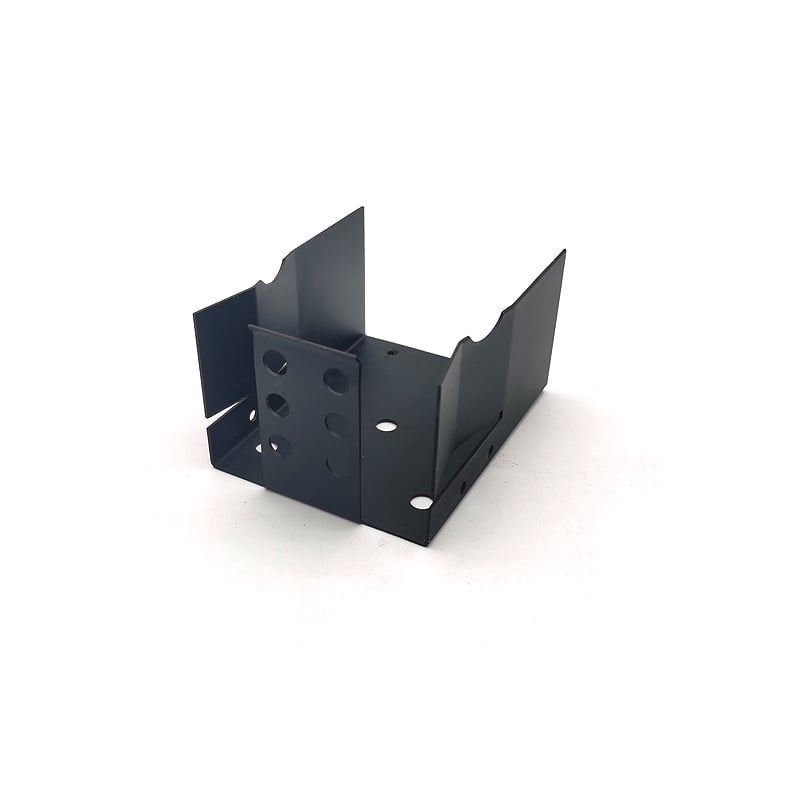
The precision capabilities of stamping parts stem from their manufacturing process, which utilizes carefully controlled mechanical forces to shape metal sheets with exceptional accuracy. This process involves sophisticated tooling systems that maintain tight tolerances throughout the production cycle. Modern stamping operations can achieve dimensional accuracies within micrometers, making them ideal for applications requiring precise component specifications. The controlled nature of the stamping process ensures consistent repeatability across large production runs, eliminating the variations commonly associated with traditional machining methods.
Advanced stamping techniques incorporate progressive die systems that perform multiple operations in a single press stroke, further enhancing precision while reducing handling-related dimensional variations. These systems utilize precision-ground tools and computer-controlled positioning mechanisms to maintain exact specifications throughout the manufacturing process. The result is stamping parts that exhibit superior dimensional stability and geometric accuracy compared to components produced through conventional forming methods.
The selection of appropriate materials plays a crucial role in achieving optimal precision with stamping parts. Different metal alloys exhibit varying responses to stamping forces, affecting the final dimensional accuracy and surface quality of the finished components. High-strength steel alloys, for instance, provide excellent dimensional stability after forming, while aluminum alloys offer superior surface finish characteristics. Understanding these material properties enables engineers to select the most suitable materials for specific precision requirements.
Material grain structure and thickness uniformity directly impact the precision achievable through stamping processes. Materials with consistent grain patterns and uniform thickness distribution produce more predictable forming results, leading to higher precision in the final stamping parts. Advanced material preparation techniques, including controlled rolling and heat treatment processes, optimize material properties specifically for precision stamping applications.
Incorporating stamping parts into product designs provides engineers with unprecedented control over dimensional accuracy across critical component interfaces. The inherent precision of stamping processes enables the production of components with tolerances that would be difficult or economically unfeasible to achieve through alternative manufacturing methods. This dimensional control extends beyond individual component accuracy to include precise alignment and positioning capabilities that enhance overall assembly precision.
The ability to maintain consistent dimensional relationships between multiple features on stamping parts eliminates the cumulative tolerance buildup commonly experienced in assemblies comprising separately machined components. This integrated approach to precision manufacturing reduces the need for secondary operations and assembly adjustments, streamlining production processes while improving final product quality. Engineers can leverage these dimensional advantages to design products with tighter functional tolerances and improved performance characteristics.
Surface quality represents another critical aspect where stamping parts contribute significantly to overall product precision. The controlled forming environment of stamping operations produces consistent surface textures and finishes that meet exacting specifications without requiring additional processing steps. This surface consistency translates directly into improved functional performance, particularly in applications where surface interactions affect product operation.
Advanced stamping techniques can incorporate surface texturing and finishing operations directly into the forming process, creating stamping parts with precisely controlled surface characteristics. These integrated finishing capabilities eliminate the variations introduced by separate finishing operations while reducing overall production time and costs. The result is components with superior surface quality that contribute to enhanced product precision and performance.
The automotive industry represents one of the most demanding applications for stamping parts, where precision requirements directly impact vehicle safety, performance, and efficiency. Modern vehicles incorporate thousands of stamping parts, each contributing to the overall precision and quality of the finished product. Critical components such as engine mounts, transmission housings, and suspension brackets require dimensional accuracies that can only be achieved through advanced stamping technologies.
Automotive stamping parts must maintain their precision characteristics under extreme operating conditions, including temperature variations, vibration exposure, and mechanical stress cycles. The inherent dimensional stability of properly designed stamping parts ensures that critical vehicle systems maintain their precise operation throughout the product lifecycle. This reliability makes stamping parts essential components in achieving the precision requirements of modern automotive designs.
Electronic device manufacturing relies heavily on stamping parts to achieve the precision necessary for miniaturized components and tight assembly tolerances. Smartphone housings, computer chassis, and electronic connector components all utilize stamping parts to achieve the dimensional accuracy required for proper function and aesthetic appeal. The ability to produce complex geometries with tight tolerances makes stamping parts ideal for these precision-critical applications.
Consumer electronics applications often require stamping parts with multiple precision features integrated into single components, reducing assembly complexity while maintaining exact dimensional relationships. This integration capability enables product designers to create more compact and efficient designs while ensuring reliable precision performance. The consistency achievable with stamping parts production methods supports the high-volume manufacturing requirements typical of consumer electronics markets.
Ensuring the precision of stamping parts requires sophisticated quality control systems that can verify dimensional accuracy and surface quality characteristics throughout the production process. Modern inspection technologies, including coordinate measuring machines and optical scanning systems, provide comprehensive evaluation capabilities for complex stamping parts geometries. These systems can detect dimensional variations at the micrometer level, ensuring that each component meets precise specifications.
In-line inspection systems integrated directly into stamping production lines enable real-time monitoring of stamping parts quality, allowing immediate process adjustments to maintain optimal precision levels. These automated quality control systems reduce inspection time while improving detection capabilities for subtle dimensional variations that could affect product performance. The result is enhanced confidence in stamping parts precision and reduced risk of quality issues in downstream applications.
Statistical process control methods provide manufacturers with powerful tools for monitoring and maintaining the precision characteristics of stamping parts production. By analyzing dimensional measurement data over time, manufacturers can identify trends and variations that might affect precision quality before they result in out-of-specification components. This proactive approach to quality management ensures consistent stamping parts precision while minimizing waste and rework costs.
Advanced statistical analysis techniques can correlate process parameters with dimensional outcomes, enabling optimization of stamping operations for maximum precision achievement. This data-driven approach to process control ensures that stamping parts consistently meet or exceed specified precision requirements while supporting continuous improvement initiatives that further enhance quality capabilities.
The economic benefits of utilizing stamping parts for precision applications extend beyond the initial component cost to include significant savings in assembly time, secondary operations, and quality control expenses. The inherent precision of stamping parts reduces or eliminates the need for post-processing operations, streamlining production flows while reducing overall manufacturing costs. This economic efficiency makes stamping parts an attractive option for companies seeking to improve product precision without proportional cost increases.
High-volume production capabilities of stamping processes provide additional economic advantages through economies of scale, making precision stamping parts cost-effective even for demanding applications. The ability to produce large quantities of identical components with consistent precision characteristics supports lean manufacturing principles while maintaining quality standards. These economic factors make stamping parts particularly attractive for applications requiring both precision and cost-effectiveness.
Modern stamping operations offer exceptional scalability, allowing manufacturers to adjust production volumes in response to market demands while maintaining consistent stamping parts precision. Progressive die systems can accommodate varying production rates without compromising dimensional accuracy or surface quality characteristics. This flexibility enables manufacturers to respond effectively to changing market conditions while preserving their precision quality standards.
Tooling design innovations have further enhanced the flexibility of stamping parts production, enabling rapid changeovers between different component configurations without significant precision degradation. This adaptability makes stamping parts suitable for both high-volume commodity applications and lower-volume specialty products requiring exceptional precision. The combination of scalability and precision makes stamping parts valuable components in diverse manufacturing environments.
Emerging material technologies are expanding the precision capabilities of stamping parts through the introduction of advanced alloys and composite materials specifically engineered for stamping applications. These materials offer enhanced dimensional stability, improved surface characteristics, and superior mechanical properties that support even more demanding precision requirements. Research into nano-structured materials and surface treatments promises further improvements in stamping parts precision capabilities.
Smart materials that respond to environmental conditions are being integrated into stamping parts designs, creating components that maintain their precision characteristics across varying operational conditions. These adaptive materials enable stamping parts to compensate for temperature variations, humidity changes, and mechanical stress cycles that might otherwise affect dimensional accuracy. This technology represents a significant advancement in precision component design capabilities.
The integration of Industry 4.0 technologies into stamping operations is revolutionizing the precision capabilities and monitoring systems for stamping parts production. Internet of Things sensors embedded in stamping equipment provide real-time feedback on process parameters that affect dimensional accuracy, enabling immediate adjustments to maintain optimal precision levels. Machine learning algorithms analyze this data to predict and prevent precision variations before they occur.
Artificial intelligence systems are being developed to optimize stamping process parameters specifically for maximum precision achievement, taking into account material properties, environmental conditions, and equipment characteristics. These intelligent systems can automatically adjust stamping operations to compensate for variables that might affect stamping parts precision, ensuring consistent quality output regardless of changing conditions. This technological evolution promises to further enhance the precision capabilities of stamping parts while reducing manufacturing costs and complexity.
Modern precision stamping parts can achieve tolerances as tight as ±0.025mm (±0.001 inch) for critical dimensions, with some specialized applications reaching even tighter specifications. The achievable tolerance depends on material properties, part geometry, and tooling precision. Advanced progressive die systems with computer-controlled positioning can maintain these tight tolerances consistently across high-volume production runs, making stamping parts suitable for the most demanding precision applications.
Stamping parts often exceed the precision capabilities of conventional machined components while offering significant cost advantages for high-volume production. The forming process eliminates tool wear variations common in machining operations, resulting in more consistent dimensional accuracy across production runs. Additionally, stamping parts can achieve complex geometries and integrated features that would require multiple machining operations, reducing cumulative tolerance buildup and improving overall precision.
Material consistency, tooling precision, and process control represent the three most critical factors affecting stamping parts precision. Uniform material thickness and grain structure ensure predictable forming behavior, while precision-ground tools maintain accurate forming surfaces. Advanced process control systems monitor and adjust stamping parameters in real-time to compensate for variables that might affect dimensional accuracy, ensuring consistent precision output throughout production runs.
Yes, properly designed stamping parts can maintain their precision characteristics in high-temperature environments through careful material selection and thermal expansion compensation techniques. Heat-resistant alloys and specialized heat treatments enable stamping parts to operate at elevated temperatures while preserving dimensional stability. Design considerations such as thermal expansion joints and stress relief features help maintain precision under thermal cycling conditions typical of high-temperature applications.

 EN
EN